Brazil vs USA: USA Leads Brazil to Victory in Fortaleza Friendly Thriller
The Brazil vs USA June 2026 friendly series delivered everything fans could want from a high-stakes international rivalry: dramatic comebacks, late-game chaos, and a decisive response that shifted the narrative in just three days.
After falling 2-1 in São Paulo, the United States Women’s National Team stormed back with a gritty 1-0 victory in Fortaleza, leveling the two-match series and proving that this rivalry remains one of the most competitive in women’s football.
The first match at Neo Química Arena on June 6 saw Brazil erase an early deficit, with Tainá Maranhão and Bia Zaneratto scoring within three minutes of each other to secure a 2-1 comeback win in front of 31,336 fans.
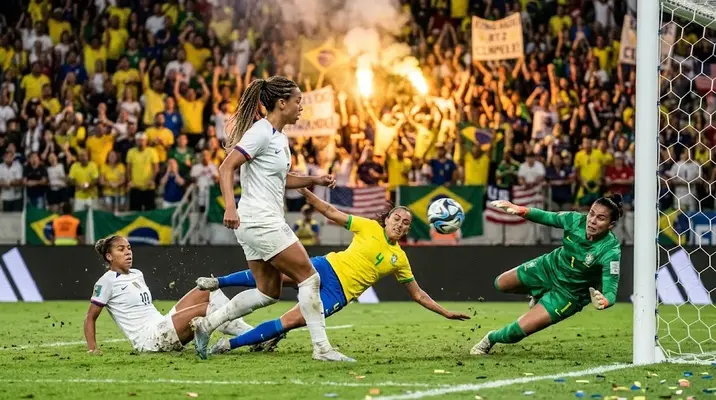
Three nights later at Estádio Castelão, in front of a raucous crowd of 55,744, the USA got revenge through a 63rd-minute own goal forced by Sophia Wilson’s aggressive pressing. The match descended into chaos late, with Brazil finishing with nine players and a total of eight red cards shown to players and staff. This is the complete player statistics breakdown of a Brazil vs USA series that exposed the tactical strengths and disciplinary vulnerabilities of both sides.
Match Overview Table
| Information | Match Details |
| Event | International Friendly (Women) |
| Game | Brazil vs USA (Second Match) |
| Date | June 9, 2026 |
| Venue | Estádio Governador Plácido Aderaldo Castelo, Fortaleza |
| Attendance | 55,744 |
| Winner | USA |
| Final Score | Brazil 0-1 USA |
| Broadcast | FIFA+, ESPN |
Core Match Statistics Overview
The second match was a study in contrasts. The USA dominated possession and chance creation, while Brazil’s game plan unraveled through disciplinary chaos rather than tactical failure. The statistics below reflect the 90+ minutes of regular time before the late red card frenzy distorted the flow.
| Metric | Brazil | USA |
| Goals | 0 | 1 (Own Goal) |
| Total Shots | 6 | 6 |
| Shots on Target | 1 | 2 |
| Corners | 4 | 2 |
| Fouls Committed | 18 | 11 |
| Yellow Cards | 11 | 0 |
| Red Cards (Players) | 4 | 0 |
| Red Cards (Staff) | 4 | 0 |
| Offsides | 3 | 1 |
Discipline Breach
- Brazil accumulated 11 yellow cards and 8 total red cards (4 players, 4 staff), a statistical anomaly that rendered their second-half push meaningless.
- The USA committed zero yellow cards in the second match, maintaining composure while Brazil’s frustration boiled over late.
Chance Creation Efficiency
- Both teams registered 6 total shots, but the USA’s 2 shots on target produced the decisive goal through Wilson’s deflected effort.
- Brazil managed only 1 shot on target despite 4 corners and late offensive pressure, reflecting poor final-third execution.
Physicality and Fouls
- Brazil committed 18 fouls compared to USA’s 11, with the foul count escalating dramatically after the 70th minute as the match became increasingly fractious.
- The USA’s disciplined defensive structure absorbed Brazil’s pressure without resorting to cynical fouling, a stark contrast to their hosts’ approach.
Period-by-Period Analysis
First Half: Tactical Stalemate
| Team | 1st Half | 2nd Half | Final |
| Brazil | 0 | 0 | 0 |
| USA | 0 | 1 | 1 |
The opening 45 minutes produced no goals but plenty of warning signs. Brazil controlled possession but struggled to break down a compact USA backline. The USA’s best chance came through Sophia Smith’s attempts, while Brazil’s Tainá Maranhão and Gabi Portilho tested the USA defense without success. A scoreless first half set the stage for Wilson’s decisive moment after the break.
Second Half: Wilson Forces the Breakthrough
The deadlock broke in the 63rd minute when Sophia Wilson’s long-range effort deflected off Brazil defender Isabela Chagas, wrong-footing goalkeeper Lorena and nestling in the net.
The goal was officially recorded as an own goal but was entirely created by Wilson’s intelligent pressing and willingness to shoot from distance. After the goal, Brazil pushed forward with increasing desperation, but their attempts to equalize devolved into frustration and eventual disciplinary collapse.
Closing Stages: Red Card Chaos
- Between the 80th and final whistle, Brazil received four player red cards: Bia Zaneratto (second yellow for pushing Emily Sonnett), Tarciane (violent conduct elbow on Wilson), Ludmila (sarcastic applause toward referee), and Kerolin (abusive language after full time).
- Brazil head coach Arthur Elias and three backroom staff members were also dismissed from the technical area, bringing the total red cards to eight.
- The USA maintained complete discipline, committing zero yellow cards while playing out the final minutes with a numerical advantage that stretched to two players.
Detailed Team Player Statistics
Brazil Player Statistics
| Player | Position | Minutes | Shots | Key Stat |
| Tainá Maranhão | FW | 79 | 1 | 1 foul committed |
| Kerolin | FW/MF | 44 | 1 | Red card (post-match) |
| Bia Zaneratto | FW | 90+4 | 0 | Red card (2nd yellow) |
| Mariza | CB | 80 | 0 | 1 foul committed |
| Lorena | GK | 90 | 0 | 1 save |
Tainá Maranhão was Brazil’s most active forward in the second match, registering the team’s only shot on target while also contributing defensively with a foul committed. Her substitution in the 79th minute removed Brazil’s most direct attacking threat as they chased an equalizer.
Kerolin entered as a substitute but failed to make an impact on the scoreline, managing just one shot. Her red card after the final whistle for foul and abusive language capped a frustrating night for the midfielder.
Bia Zaneratto had scored the winner in São Paulo three days earlier but was anonymous in Fortaleza before her dismissal for a second yellow card. The veteran forward’s loss of composure symbolized Brazil’s collective discipline failure.
USA Player Statistics
| Player | Position | Minutes | Shots | Key Stat |
| Sophia Wilson | FW | 90 | 3 | Forced own goal (63′) |
| Sophia Smith | FW | 90 | 2 | 1 shot on target |
| Lindsey Horan | MF | 90 | 1 | 1 foul committed |
| Emily Sonnett | DF | 90 | 0 | 1 foul committed |
| Claudia Dickey | GK | 90 | 0 | Clean sheet |
Sophia Wilson was the match-winner without officially scoring. Her 25th international goal had come in the first match, and her aggressive pressing and long-range effort in the second forced the own goal that decided the series. Wilson also drew the violent elbow from Tarciane that reduced Brazil to nine players.
Sophia Smith provided constant threat on the wing, registering two shots and forcing Brazil’s defense to stay honest throughout. Her substitution in the 90+12th minute was purely tactical as the USA ran down the clock.
Claudia Dickey earned the clean sheet in goal, making one save and commanding her box effectively despite the hostile Fortaleza atmosphere. Her booking in the 90+4th minute was the USA’s only disciplinary mark of the match.
Statistical Leaders Summary Table
| Category | Brazil | USA |
| Leading Scorer (Series) | Tainá Maranhão / Bia Zaneratto (1) | Sophia Wilson (1) |
| Most Shots (Match 2) | Tainá Maranhão / Kerolin (1 each) | Sophia Wilson (3) |
| Top Defender | Lorena (1 save) | Claudia Dickey (1 save, clean sheet) |
| Most Disciplined | — | Entire squad (0 yellow cards) |
| Most Red Cards | 4 players + 4 staff | 0 |
Analytical Breakdowns
Why USA Won
Clinical Use of Limited Chances
The USA managed only two shots on target across 90 minutes, yet emerged victorious. Wilson’s willingness to shoot from range created the deflection that beat Lorena, demonstrating the value of testing goalkeepers even from low-probability positions. Brazil’s single shot on target reflected their inability to generate quality chances despite territorial pressure.
| Metric | Brazil | USA |
| Shots on Target | 1 | 2 |
| Goals | 0 | 1 |
| Conversion Rate | 0% | 50% (on target) |
Discipline Under Provocation
The USA committed zero yellow cards in a match that saw Brazil receive 11 yellows and 8 reds. Maintaining composure in a hostile environment, with a partisan crowd of 55,744 urging Brazil forward, required immense mental fortitude. Lindsey Horan and Emily Sonnett absorbed physical challenges without retaliation, ensuring the USA kept their full complement of players while Brazil self-destructed.
Why Brazil Lost
Inability to Convert Possession into Quality
Brazil’s four corners and territorial advantage produced just one shot on target. The lack of a focal point in the final third became glaring as Gabi Portilho and Tainá Maranhão struggled to find space against the USA’s organized backline. Marta’s introduction in the 11th minute (after an early substitution pattern) added creativity but not penetration.
Complete Loss of Composure
The eight red cards tell the story of Brazil’s second-half collapse. Bia Zaneratto’s push on Sonnett, Tarciane’s elbow on Wilson, and the post-match dismissals of Ludmila and Kerolin revealed a team unable to handle the pressure of chasing a deficit. Head coach Arthur Elias’s dismissal from the technical area removed the tactical leadership Brazil desperately needed in the final stages.
| Discipline Metric | Brazil | USA |
| Yellow Cards | 11 | 0 |
| Red Cards (Players) | 4 | 0 |
| Red Cards (Staff) | 4 | 0 |
| Total Cards | 19 | 0 |
Historical Context & Advanced Insights
Season Series Breakdown
| Date | Venue | Result | Attendance |
| June 6, 2026 | Neo Química Arena, São Paulo | Brazil 2-1 USA | 31,336 |
| June 9, 2026 | Estádio Castelão, Fortaleza | Brazil 0-1 USA | 55,744 |
The series split left both teams with valuable lessons ahead of the 2027 FIFA Women’s World Cup. Brazil’s São Paulo victory showcased their comeback ability and attacking resilience, while Fortaleza exposed their disciplinary fragility. The USA’s response demonstrated the squad depth and mental toughness required to win on South American soil, a feat they had not accomplished since 1997.
Advanced Statistical Insights
The assist-to-shot ratio in this series revealed a fundamental difference in attacking philosophy. Brazil’s goals in São Paulo came from open-play combinations (Isabela assisting Maranhão, Dudinha assisting Zaneratto), while the USA’s winner in Fortaleza came from individual pressing rather than constructed buildup. Wilson’s shot that deflected off Isabela was not the product of intricate passing but of persistent harassment of the Brazilian defense.
The USA’s zero-card performance in Fortaleza stands in stark contrast to their aggressive playing style in previous matches. This shift suggests a tactical emphasis on controlled aggression, winning the ball without conceding set-piece opportunities or numerical disadvantages. Brazil’s 19 total cards across player and staff categories is an outlier that coaching staff will need to address before competitive tournament play.
Game Implications & Key Lessons
What This Means for USA
- First win in Brazil since 1997: Breaking a 29-year drought on Brazilian soil provides tangible evidence that this squad can handle hostile environments in tournament settings.
- Squad depth validated: With key players managing limited minutes and substitutions making an impact, the USA demonstrated the roster flexibility required for a deep World Cup run.
- Disciplinary discipline: The zero-card performance shows mature leadership from veterans like Horan and Sonnett, who kept the team focused amid provocation.
What This Means for Brazil
- Disciplinary overhaul required: Eight red cards in a single match, regardless of the friendly context, indicates a cultural issue that Arthur Elias must address immediately.
- Final-third efficiency concerns: Generating one shot on target from four corners and sustained possession highlights a tactical deficiency that opponents will exploit.
- Crowd support wasted: A record crowd of 55,744 in Fortaleza created an intimidating atmosphere that Brazil failed to channel into positive momentum.
Key Lessons
- Pressing with purpose can create goals from nothing — Wilson’s deflected effort proves that shooting from range is always worthwhile.
- Discipline wins matches: Brazil had the talent to draw or win both fixtures but lost the second through self-inflicted numerical disadvantage.
- Possession without penetration is meaningless; Brazil’s 6 shots matched USA’s total but their shot quality was far inferior.
- Goalkeepers must stay focused despite limited involvement — Lorena’s positioning on the deflected goal was slightly off, a small detail in a tight match.
- Substitutions can either stabilize or destabilize; Brazil’s changes added chaos rather than control.
- Rivalries in women’s football are intensifying, and the USA-Brazil series will only grow in significance as the 2027 World Cup approaches.
FAQs
Who won the Brazil vs USA match on June 9, 2026?
The United States won 1-0 through an own goal forced by Sophia Wilson in the 63rd minute.
How many red cards did Brazil receive in the Fortaleza match?
Brazil received eight red cards total: four to players (Bia Zaneratto, Tarciane, Ludmila, Kerolin) and four to staff members, including head coach Arthur Elias.
Who scored Brazil’s goals in the first match?
Tainá Maranhão scored in the 11th minute and Bia Zaneratto scored the winner in the 14th minute as Brazil won 2-1 in São Paulo.
What was the attendance at Estádio Castelão for the second match?
55,744 fans attended the match in Fortaleza, a record crowd for the venue.
How many shots on target did Brazil manage in the second match?
Brazil registered just one shot on target despite having four corners and 18 fouls committed.
When was the last time the USA won in Brazil before this match?
The USA’s 1-0 victory in Fortaleza was their first win on Brazilian soil since 1997.
Conclusion
The Brazil vs USA June 2026 series was a microcosm of both teams’ current trajectories. Brazil possesses undeniable attacking talent, as shown by their São Paulo comeback, but a chronic inability to maintain composure under pressure undermines their potential. The USA, meanwhile, demonstrated that efficiency in front of goal and mental discipline can overcome hostile environments and possession disadvantages.
Wilson’s deflected winner and Brazil’s eight red cards will be remembered as the defining moments of a series that exposed one team’s fragility and confirmed the other’s resilience. As both sides prepare for the 2027 World Cup, the Fortaleza match offers a clear lesson: talent alone does not win matches; discipline and decision-making under pressure do.