Mexico National Football Team vs South Korea National Football Team: Luis Romo’s Second-Half Strike Sends El Tri Into the Knockouts
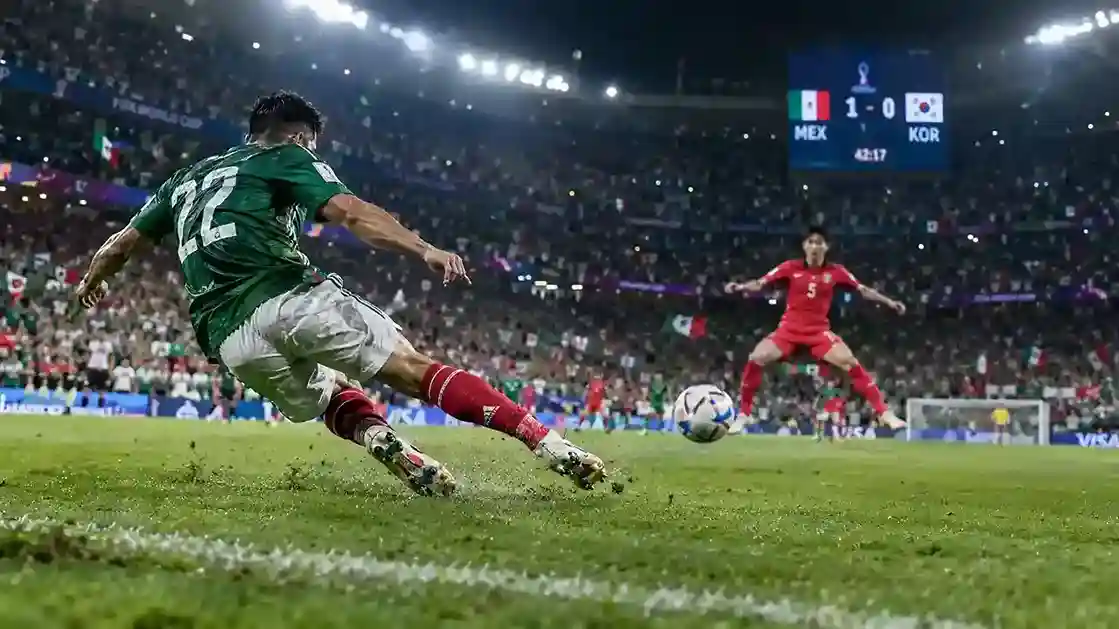
A World Cup group finale with everything on the line rarely gets settled by a single moment, but that’s exactly what happened when Mexico national football team vs South Korea national football team turned on one costly error. Fans wanted certainty in Group A, tension delivered a scoreless first half, and Luis Romo’s 50th-minute finish gave the co-hosts the answer everyone in Guadalajara was waiting for.
The Lead
Mexico beat South Korea 1-0 on Thursday, June 18, 2026, at Estadio Akron in Zapopan, Guadalajara, in front of a sellout crowd near the stadium’s 48,000 capacity. The result made El Tri the first team to clinch a spot in the round of 32 at the 2026 FIFA World Cup, finishing Group A on six points with a game still to play.
It wasn’t a free-flowing performance from either side — this was a game decided by nerve and a single mistake rather than a string of clear-cut chances.
The first 45 minutes produced almost nothing to work with: three shots from Mexico, none from South Korea, and a scoreless deadlock that had home fans booing their own team at the break. The second half flipped almost immediately.
In the 50th minute, South Korea goalkeeper Kim Seung-gyu came off his line to claim a routine high ball, collided with his own defender Lee Gi-hyuk, and spilled it straight into the path of Luis Romo, who lifted it into an empty net. From there, Mexico controlled the game state, and Raul Rangel’s brilliant stoppage-time double save denied Cho Gue-sung and Yang Hyun-jun to protect the clean sheet and the win.
Match Overview
| Information | Match Details |
| Event | 2026 FIFA World Cup, Group A |
| Game | Mexico vs South Korea |
| Date | Thursday, June 18, 2026 |
| Venue | Estadio Akron, Zapopan (Guadalajara), Mexico |
| Attendance | Approx. 45,000–48,000 (sellout) |
| Winner | Mexico |
| Final Score | 1-0 |
| Broadcast | FOX (English), Telemundo (Spanish) |
Core Match Statistics Overview
The underlying numbers tell a more complicated story than the scoreline suggests. South Korea actually out-shot Mexico and finished with the higher expected-goals total, but couldn’t turn territory into a real edge in the moments that mattered.
| Metric | Mexico | South Korea |
| Possession | 42% | 58% |
| Total Shots | 8 | 9 |
| Shots on Target | 4 | 2 |
| Expected Goals (xG) | 0.48 | 0.69 |
| Fouls Committed | 6 | 8 |
| Yellow Cards | 0 | 1 |
| Saves | 2 | 3 |
Shot Quality vs Shot Volume
- Mexico converted fewer total shots into a genuinely dangerous look, but Romo’s chance carried real value because of the defensive breakdown that created it, not because of a sustained buildup.
- South Korea’s higher shot count and xG reflect their control of the ball for long stretches, yet only two of those attempts tested Rangel directly.
Possession Without Punch
- South Korea’s 58% possession share is one of the clearest signs in the box score that Mexico were comfortable ceding the ball in wide areas and compressing centrally.
- Ball control alone didn’t translate into rhythm in the final third — South Korea’s midfield struggled to consistently find runners like Son Heung-min in behind a well-organized Mexican back line.
Goalkeeping Swing
- Kim Seung-gyu’s mishandled claim was the single biggest swing metric of the match, converting a routine defensive situation into a goal against the run of play.
- Rangel’s double save in the 87th minute was worth more than one point on paper; it directly preserved the win and kept Mexico’s group-stage momentum intact.
Discipline and Territory
- South Korea committed more fouls (8 to 6) and picked up the match’s only yellow card, a sign of the frustration that built as chances went unconverted.
- Mexico’s ability to defend set pieces and second balls limited South Korea’s chances from dead-ball situations despite conceding several corners late.
Period-by-Period Analysis
First Half
| Half | Mexico | South Korea |
| Shots | 3 | 0 |
| Goals | 0 | 0 |
- Both teams played cautiously, aware that a loss would badly damage their knockout hopes, and it showed in a first 45 minutes with almost no clean opportunities.
- Mexico had the run of the early possession stats but couldn’t turn territorial control into a shot on target, drawing groans from the home fans by the break.
- South Korea sat compact and absorbed pressure, content to feel out the game before committing numbers forward after the interval.
Second Half
| Half | Mexico | South Korea |
| Shots | 5 | 9 |
| Goals | 1 | 0 |
- The goal in the 50th minute changed the entire complexion of the match — Mexico dropped into a lower block and looked to break, while South Korea were forced to commit more numbers forward.
- South Korea’s second-half surge in shots and possession came largely after they were already chasing the game, which is reflected in their higher second-half xG.
- Rangel’s two saves inside the final five minutes were the difference between a nervy 1-0 win and a draw that would have left Group A’s outcome unresolved heading into matchday three.
Mexico Player Statistics
Luis Romo (Midfielder) — 1 goal, 54 touches, 7 duels won. Romo’s positioning inside the box was the decisive factor of the match; he read the goalkeeper’s mistake instantly and finished calmly into an open net, then was subbed off shortly after his goal having done his job.
Raul Jimenez (Forward) — 32 touches, 2 shots, 0.28 xG, the highest of any Mexico player. Jimenez was Mexico’s most dangerous individual outlet in behind the South Korean defense, generating the side’s best individual scoring chance even though it didn’t result in a goal.
Julian Quinones (Forward) — 45 touches, 1 shot on target, 0.06 xG, 0.14 xA. Quinones was heavily involved in Mexico’s early buildup and created the most for teammates among the front three, even if the final product wasn’t there in the first half.
Raul Rangel (Goalkeeper) — 2 saves, 0 goals conceded, 0.76 goals prevented. Rangel’s shot-stopping, particularly the stoppage-time double save, directly protected Mexico’s lead and their position atop Group A.
South Korea Player Statistics
Cho Gue-sung (Forward) — 5 touches, 2 shots, 1 shot on target, 0.50 xG. Introduced from the bench, Cho immediately became South Korea’s biggest attacking threat, generating the match’s highest individual xG on limited touches but unable to beat Rangel.
Son Heung-min (Forward) — 19 touches, 2 duels won after coming on at the break. Son struggled to get consistent service in behind a well-drilled Mexican defense and never had a clean look at goal despite his influence on the ball.
Lee Kang-in (Midfielder) — 74 touches, 2 shots, 0.05 xG, 0.15 xA, the team’s top creative outlet. Lee was central to South Korea’s buildup play and possession share, repeatedly probing from midfield, but couldn’t unlock the final pass that would have produced a clear chance.
Kim Seung-gyu (Goalkeeper) — 3 saves, 1 goal conceded, -0.10 goals prevented. Kim’s collision-induced fumble directly gifted Mexico the game’s only goal, overshadowing three second-half saves that otherwise kept the score respectable.
Statistical Leaders Summary
| Category | Mexico | South Korea |
| Goal Scorer | Luis Romo (1) | — |
| Highest xG | Raul Jimenez (0.28) | Cho Gue-sung (0.50) |
| Top Creator (xA) | Julian Quinones (0.14) | Lee Kang-in (0.15) |
| Most Duels Won | Edson Alvarez / Luis Romo (7) | Kim Min-jae (8) |
Why Mexico Won
A Ruthless Reaction to a Defensive Gift
Mexico only needed one meaningful moment in the box to convert a defensive lapse into three points, and Romo’s calm finish under pressure did exactly that.
| Metric | Mexico |
| Shot Conversion | 12.5% (1 goal from 8 shots) |
| Shots on Target Ratio | 50% |
Defensive Shape Without the Ball
- Mexico were comfortable conceding 58% possession because their defensive block rarely allowed clean entries into the penalty area for South Korea’s front line.
- Edson Alvarez’s 12 defensive interventions anchored a midfield screen that limited South Korea’s central progression all night.
Game Management After the Goal
- Once ahead, Mexico’s substitutions (bringing on Obed Vargas, Orbelin Pineda, and Cesar Huerta) were built to protect the lead rather than chase a second goal.
- The tactical patience paid off directly in the closing stages when Rangel’s saves closed out the result.
Why South Korea Lost
Wasteful Conversion Despite Territorial Control
South Korea finished with more shots and a higher xG total but converted none of it, a clear sign that quality of chance mattered more than volume of possession in this particular game.
A Costly Individual Error
Kim Seung-gyu’s mishandled claim in the 50th minute erased what had been a fairly even defensive night for South Korea and put his side in a hole they never recovered from.
Late Urgency, Not Enough Precision
- South Korea’s best individual chances (Cho Gue-sung’s 0.50 xG effort, Yang Hyun-jun’s follow-up) both arrived in the final ten minutes, too late to fully capitalize on Mexico’s tiring legs.
Historical Context & Advanced Insights
Season Series and Head-to-Head Breakdown
| Date | Result | Competition |
| Sept 10, 2025 | Mexico 2-2 South Korea | International Friendly |
| Nov 14, 2020 | Mexico 3-2 South Korea | International Friendly |
| June 23, 2018 | South Korea 1-2 Mexico | FIFA World Cup |
| Jan 30, 2014 | Mexico 4-0 South Korea | International Friendly |
| July 26, 2012 | Mexico 0-0 South Korea | Olympic Men’s Soccer |
Mexico has now won two of the last three World Cup-related meetings between these two federations, and this result extended their unbeaten run against South Korea across multiple competitions in recent cycles.
Expected Goals vs Actual Result
The gap between South Korea’s 0.69 xG and their zero goals is one of the widest efficiency swings of any Group A match so far. Mexico, by contrast, needed only 0.48 xG worth of chances to produce the game’s only goal — largely because that value was concentrated in a single high-probability moment created by a goalkeeping error rather than distributed evenly across several lower-quality attempts.
That distinction between “quality created” and “quality converted” is often the real story behind a 1-0 scoreline that looks tighter on paper than it played out on the pitch.
Game Implications & Key Lessons
What This Means for Mexico
- Mexico finishes Group A in first place regardless of their result against Czechia, guaranteeing a home fixture in the round of 32.
- The win builds belief in Javier Aguirre’s rotation policy after making three lineup changes from the tournament opener.
- A cleaner offensive performance is still needed before the knockout rounds, given the limited shot volume against a mid-table opponent.
What This Means for South Korea
- South Korea now needs a result against South Africa on June 24 in Monterrey to guarantee a top-two finish and safe passage to the knockout stage.
- Improving decision-making in the final third is essential — generating a higher xG than the opponent while scoring zero goals is not sustainable heading into a win-or-go-home scenario.
- Goalkeeper handling under pressure will be a key coaching focus before the next match.
Key Lessons From the Match
- A single individual error can outweigh 90 minutes of even territorial play.
- Higher possession and shot totals don’t guarantee goals without quality service in the box.
- Elite goalkeeping, not just outfield play, regularly decides tight group-stage matches.
- Squad rotation can work when the starting spine (defense and goalkeeper) stays reliable.
- Game management after taking a lead is as important as creating the chance itself.
- Head-to-head history and recent form both pointed to a close contest, and the final margin reflected that.
FAQs
Who won the Mexico vs South Korea World Cup match?
Mexico won 1-0, with Luis Romo scoring the only goal in the 50th minute.
Who scored the goal in Mexico vs South Korea?
Luis Romo scored after South Korea goalkeeper Kim Seung-gyu spilled a high ball following a collision with his own defender.
What were the final match stats?
South Korea had 58% possession and 9 shots to Mexico’s 8, but managed only 2 shots on target compared to Mexico’s 4.
Where was the match played?
The game was played at Estadio Akron in Zapopan, part of the Guadalajara metro area, in front of a sellout crowd.
What does this result mean for Group A?
Mexico clinched top spot and a home round-of-32 fixture, while South Korea must get a result against South Africa on June 24 to advance.
Did South Korea create more chances than Mexico?
Statistically yes — South Korea finished with a higher expected-goals total (0.69 to 0.48) but couldn’t convert that pressure into a goal.
Conclusion
This was a match where efficiency, not dominance, decided the outcome. South Korea controlled long stretches of possession and generated the better underlying numbers, but one costly error and a clutch goalkeeping performance from Raul Rangel were enough to hand Mexico the win.
For a co-host chasing momentum into the knockout stage, a result built on defensive discipline and a single clinical finish may prove just as valuable as a dominant performance would have been.