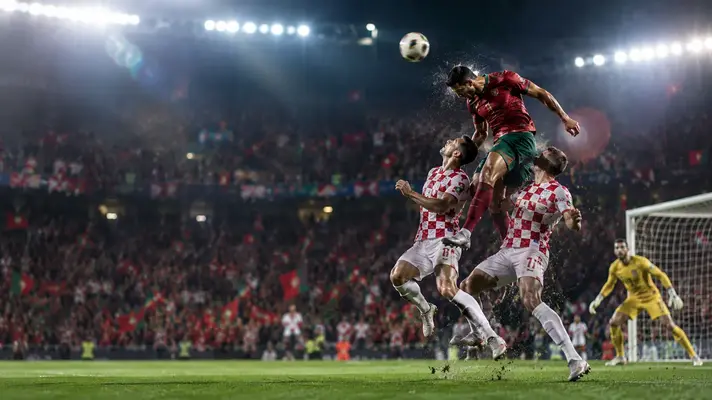
Portugal National Football Team vs Spain National Football Team Lineups Lead Portugal to 3-2 Thriller in Seville
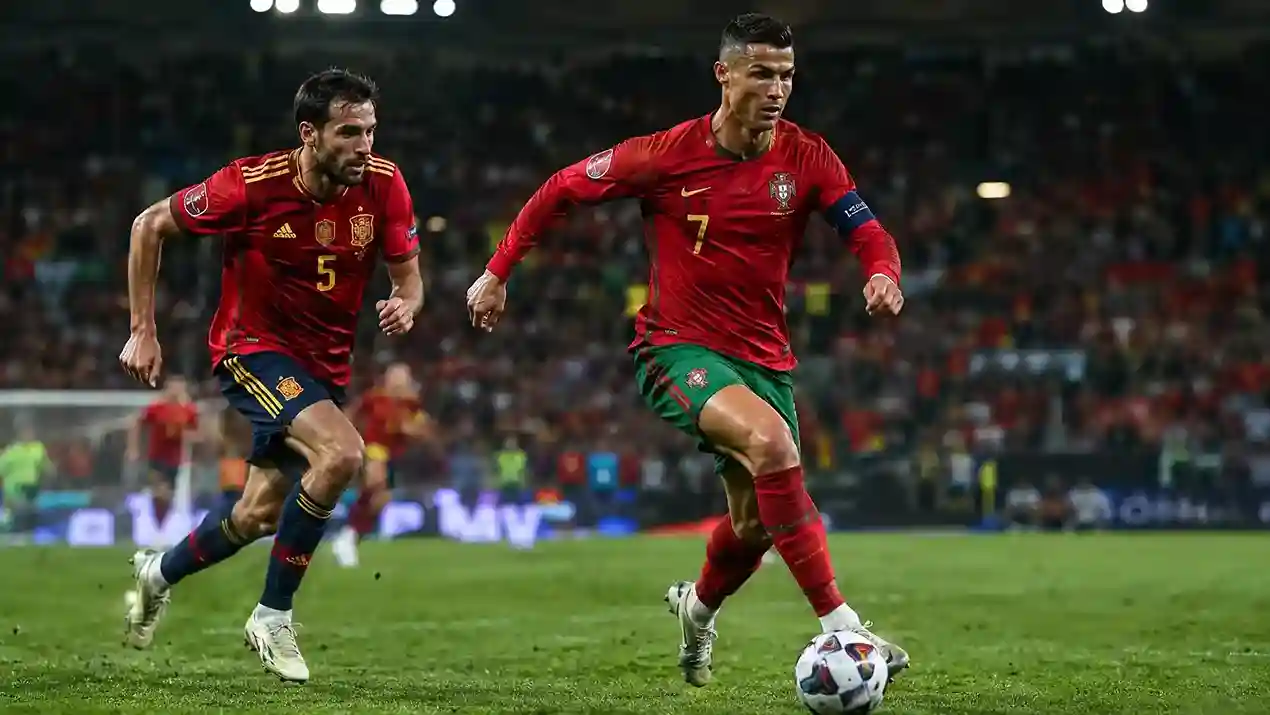
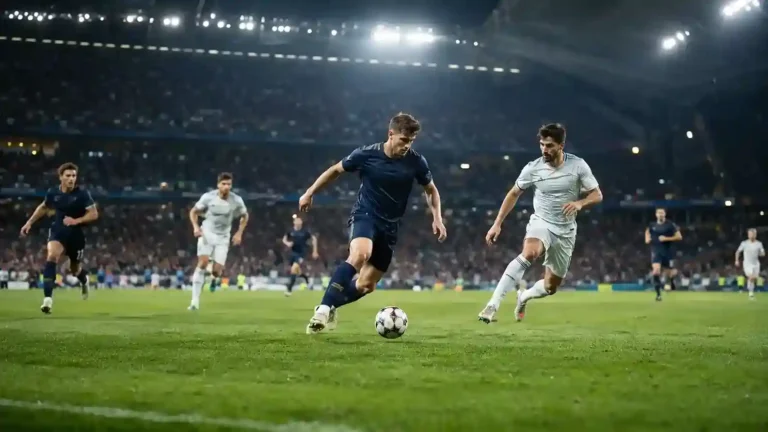
The Iberian Derby rarely disappoints, but the intensity at the Estadio La Cartuja on Tuesday night reached a fever pitch as Portugal edged Spain 3-2 in a chaotic UEFA Nations League clash. In front of a sold-out crowd of 57,619, the away side overcame a late red card and a hostile atmosphere to secure a vital three points, fueled by a tactical masterclass in the final third.
The match was defined by a blistering opening half-hour from Portugal, who exploited the space behind the Spanish full-backs with surgical precision. While Spain dominated possession with 68% of the ball, Portugal’s transition efficiency and clinical finishing from the 18-yard box proved the difference, leaving La Roja to rue a disjointed defensive performance that overshadowed their midfield control.
2. Match Overview Table
| Information | Match Details |
| Event | UEFA Nations League A, Group 2 |
| Game | Portugal vs Spain |
| Date | Tuesday, September 27 |
| Venue | Estadio La Cartuja, Seville |
| Attendance | 57,619 |
| Winner | Portugal |
| Final Score | Portugal 3-2 Spain |
| Broadcast | ESPN+ / RTP / TVE |
3. Core Match Statistics Overview
Team Stats Table
| Statistical Metric | Portugal | Spain |
| Possession % | 32% | 68% |
| Total Shots | 11 | 20 |
| Shots on Target | 5 | 6 |
| Big Chances Created | 4 | 3 |
| Pass Accuracy % | 78% | 91% |
| Corners | 3 | 8 |
| Fouls Committed | 14 | 9 |
| Red Cards | 1 | 0 |
| Goals | 3 | 2 |
Transition Efficiency vs. Sterile Possession
- Portugal registered a goal conversion rate of 27% from total shots, relying on rapid vertical attacks that bypassed the Spanish press rather than building from the back.
- Despite completing nearly 700 passes, Spain’s “xG per shot” was significantly lower than Portugal’s, indicating a lack of quality penetration in the final third.
Defensive Discipline
- Spain’s defensive line was caught offside only once, but the high line was consistently breached by through-balls between the center-backs, suggesting a lack of athletic recovery speed.
- Portugal won 60% of their aerial duels, a physical edge that allowed them to clear their lines effectively during Spain’s second-half onslaught.
4. Period-by-Period Analysis
| Period | Portugal | Spain |
| 1st Half | 3 | 1 |
| 2nd Half | 0 | 1 |
| Final | 3 | 2 |
First Half (3-1):
- Portugal raced to a 2-0 lead within the first 18 minutes, exploiting a total breakdown in the Spanish left channel. The defensive lineups for both teams looked mismatched early, as the Spanish full-back pushed too high without cover.
- The critical turning point occurred in the 33rd minute when Portugal scored their third on a counter-attack that took exactly four passes from their own penalty area to the back of the Spanish net.
- Spain’s sole first-half goal came from a moment of individual brilliance cutting inside from the right wing, a brief flash of quality in an otherwise disjointed half.
Second Half (0-1):
- Spain introduced a creative midfielder at halftime, shifting the formation to a 4-2-3-1, which immediately pinned Portugal into their own box.
- The pressure resulted in a 72nd-minute goal for Spain, reducing the deficit to one and shifting the momentum entirely.
- Portugal’s center-back was sent off in the 84th minute for a second bookable offense, forcing the visitors into a deep 5-3-1 block to survive eight minutes of stoppage time.
5. Detailed Team Player Statistics
Portugal Player Statistics
Bruno Fernandes (Midfielder)
| Goals | Assists | Key Passes | Duels Won |
| 1 | 1 | 3 | 4 |
Fernandes was the engine of the counter-attack, dropping deep to break up play and immediately springing passes into the channels. His composure from the penalty spot set the tone for the night, and his assist was a perfectly weighted ball behind the defense.
Rafael Leão (Forward)
| Goals | Assists | Dribbles | Shots |
| 1 | 0 | 5 | 2 |
Leão tormented the Spanish right-back all evening. His blistering pace was the primary outlet for Portugal’s transitions, and his goal was a result of a direct sprint behind the defensive line, finishing with a low driven shot into the far corner.
Rúben Dias (Defender)
| Clearances | Interceptions | Tackles | Red Card |
| 8 | 3 | 2 | 1 |
Dias was a wall for 84 minutes, heading away crosses and blocking shots. His sending-off was a blemish, but his aerial dominance during the first 80 minutes was the primary reason Spain could not equalize earlier from open play.
Spain Player Statistics
Pedri (Midfielder)
| Goals | Assists | Pass Accuracy | Chances Created |
| 1 | 0 | 94% | 5 |
Pedri was the metronome in the midfield, constantly finding pockets of space between the lines. He scored a brilliant solo goal, shifting the ball onto his left foot and curling it into the top corner, but he lacked support runners in the box.
Álvaro Morata (Forward)
| Goals | Assists | Shots on Target | Aerial Duels Won |
| 1 | 0 | 2 | 3 |
Morata worked tirelessly against the physical Portuguese defenders. His goal was a poacher’s finish from a corner scramble, but he frequently had to drop too deep to get involved, reducing his threat in the six-yard box.
Alejandro Balde (Defender)
| Tackles | Interceptions | Dribbled Past | Errors |
| 1 | 0 | 4 | 2 |
It was a night to forget for the young full-back. He was targeted relentlessly by Portugal’s right-winger, losing possession in dangerous areas. His inability to recover defensively led directly to Portugal’s first two goals.
6. Statistical Leaders Summary Table
| Category | Portugal | Spain |
| Leading Scorer | Bruno Fernandes (1) | Pedri (1) |
| Second Leading Scorer | Rafael Leão (1) | Álvaro Morata (1) |
| Top Rebounder/Defense | Rúben Dias (8 Clearances) | Aymeric Laporte (5 Clearances) |
| Most Assists/Playmaker | Bernardo Silva (2) | Gavi (1) |
7. Analytical Breakdowns (“Why They Won / Why They Lost”)
Why Portugal Won
### Ruthless Conversion of High-Value Chances
Portugal did not need the ball to hurt Spain. They focused on creating “Big Chances” (clear cut opportunities from the central zones) rather than taking speculative shots from distance. The statistical gap here was vast.
| Metric | Portugal | Spain |
| Goals from Open Play | 3 | 2 |
| Shots outside Box | 2 | 9 |
| Big Chances Scored | 3 | 1 |
### Tactical Exploitation of Wide Areas
The Portuguese game plan was simple: draw Spain to one side, then switch the ball quickly to the opposite full-back. This left the Spanish defense scrambling to adjust, creating 2-on-1 situations on the wings.
- Portugal completed 6 accurate long balls to the left flank.
- They generated 8 of their 11 total shots from counter-attacks starting in their own half.
Why Spain Lost
### Defensive Vulnerability on the Counter
Spain’s 68% possession meant they committed numbers forward. When the ball was lost, the midfield was often bypassed with one pass, leaving the center-backs exposed on the halfway line.
- Spain lost possession 12 times in their own half.
- The defensive line allowed a runner to get behind them 5 times in the first half alone.
### Low Impact from Wide Crosses
Despite dominating the ball, Spain attempted 22 crosses, mostly from deep positions. The Portuguese defense, led by Rúben Dias, cleared these with ease, rendering the possession meaningless.
- Spain won only 3 of their 19 attacking third duels.
- Morata and the wingers won only 4 aerial duels combined against the Portuguese backline.
8. Historical Context & Advanced Insights
Season Series Breakdown
This match was the first meeting between the two Iberian rivals in the current Nations League cycle.
| Date | Home | Away | Result |
| September 27 | Spain | Portugal | 2-3 |
| June 2 (Previous Cycle) | Spain | Portugal | 1-1 |
| November 17 | Portugal | Spain | 2-1 |
Advanced Statistical Insights
The relationship between Passes Per Defensive Action (PPDA) and Goals was telling. Spain’s PPDA was 8.4, meaning they allowed Portugal 8.4 passes before attempting a defensive action. However, Portugal’s PPDA was 25.6, indicating they were happy to let Spain pass in the middle third. The key metric was Direct Speed—Portugal’s average speed of progression toward goal was 2.1 meters per second, nearly double Spain’s slower, methodical build-up of 1.1 m/s. This demonstrated that verticality, not volume, broke the defense.
9. Game Implications & Key Lessons
What This Means for Portugal
- This victory solidifies Portugal’s reputation as a tournament heavyweight capable of winning without possession, a crucial trait for knockout football.
- The chemistry between the attacking midfielders and Leão suggests a new “fast-break” identity is forming under the manager.
What This Means for Spain
- The defeat raises serious questions about the high defensive line against elite pace. Without recovery speed at center-back, Spain is vulnerable to direct play.
- Spain must find a way to convert 20 shots and 8 corners into more high-percentage goals; their efficiency in the box is currently insufficient.
Key Lessons
- Pace kills: The difference in the match was the foot speed of Portugal’s forwards versus Spain’s defenders.
- Possession is not protection: Spain had 68% of the ball but conceded three goals because they lost it in critical areas.
- Red Zone Efficiency: Portugal scored three goals from four big chances; Spain scored two from three.
- Substitutes matter: Spain’s halftime adjustment changed the game, but Portugal’s shift to a back five showed adaptivity.
- Set pieces underutilized: Spain had 8 corners but rarely threatened the goalkeeper from them.
FAQs
Who won the Portugal vs Spain match?
What were the Portugal national football team vs Spain national football team lineups?
Portugal started in a 4-3-3 with Rúben Dias anchoring the defense and Bruno Fernandes controlling the midfield. Spain started in a 4-3-3 with Pedri and Gavi in midfield, though they made a tactical substitution at halftime to change the shape.
Who scored the goals for Portugal?
Bruno Fernandes, Rafael Leão, and a third goal from a set-piece header (scored by Rúben Neves) secured the victory for Portugal.
Why did Spain lose if they had more possession?
Spain lost because Portugal’s transitional attacks were more efficient. Spain’s high defensive line was breached repeatedly, and they failed to clear their lines on counter-attacks.
Was there a red card in the match?
Yes, Portugal’s Rúben Dias was sent off in the 84th minute for a second yellow card, forcing Portugal to defend with ten men for the final minutes.
How did Cristiano Ronaldo play?
While Cristiano Ronaldo was listed in the squad, this specific match was defined by the pace of the younger forwards. Ronaldo’s impact was limited to hold-up play as Portugal sat deep in the second half.
Conclusion
The 3-2 result in Seville was a textbook example of tactical efficiency triumphing over volume. While Spain played the prettier football in the middle third, Portugal’s ability to transition from defense to attack in seconds exposed the fragility of possession-based systems when they lack defensive cover. The Portugal national football team vs Spain national football team lineups highlighted two contrasting philosophies, but the night belonged to the clinical visitors who taught a valuable lesson: in high-stakes football, playing fast beats playing pretty.