Green Bay Packers vs Baltimore Ravens Match Player Stats: Derrick Henry Leads Ravens to Victory
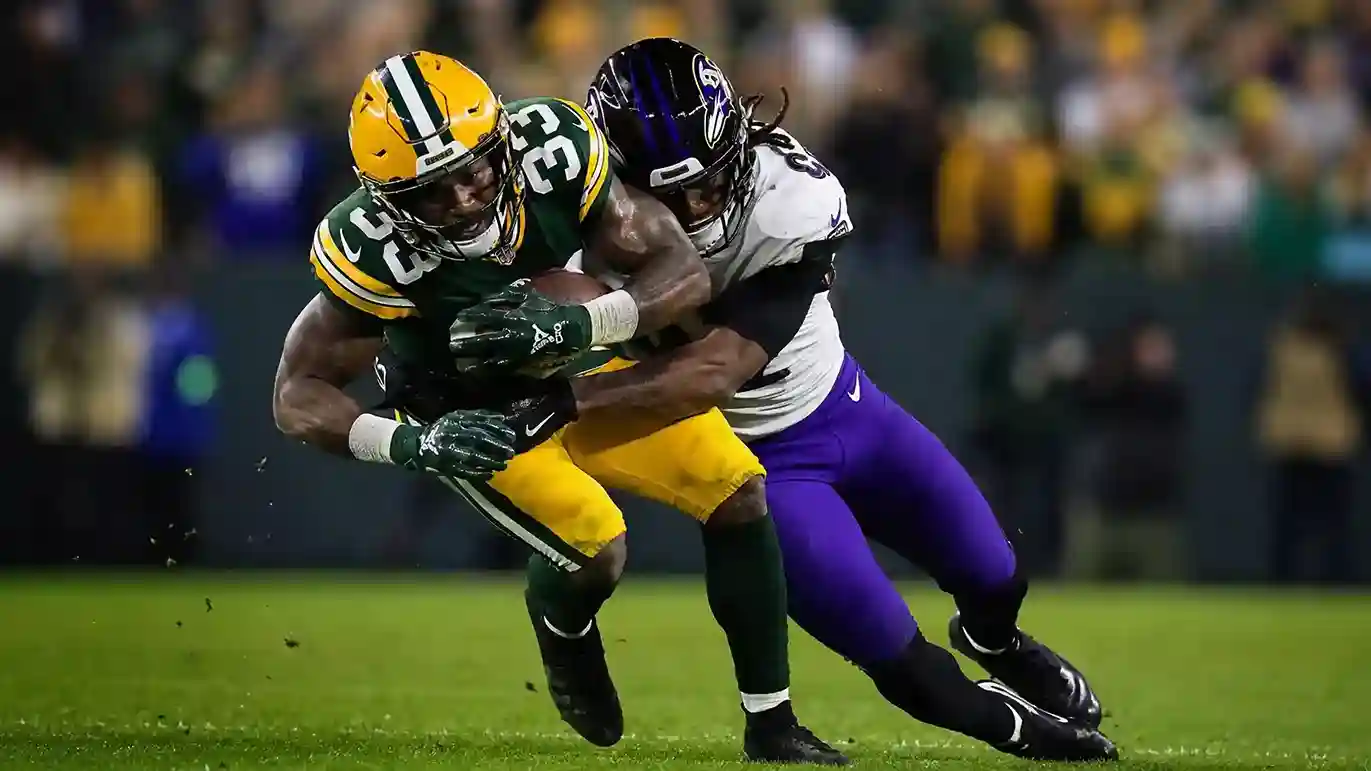
Struggling to find a clean, accurate breakdown of the green bay packers vs baltimore ravens match player stats from Week 17? Box scores scattered across five different sites make it hard to see the full picture of what actually happened at Lambeau Field. This article pulls every key number into one place, so you can see exactly how Baltimore turned a back-and-forth shootout into a 41-24 win.
The Lead
On Saturday night, December 27, 2025, the Baltimore Ravens beat the Green Bay Packers 41-24 at Lambeau Field in a Week 17 matchup that ended up shaping the final NFC and AFC playoff picture. Attendance at the historic venue was near capacity, with temperatures hovering around 37°F for the primetime kickoff. Baltimore improved to 8-8 on the season, while Green Bay dropped to 9-6-1 but had already secured a playoff berth heading into the contest.
The game turned into a personal duel between Derrick Henry and a Packers offense playing without an injured Jordan Love. Henry ran for a career-high 216 yards and four touchdowns on 36 carries, powering Baltimore to 307 rushing yards as a team. Green Bay countered with backup quarterback Malik Willis, who completed 18 of 21 passes for 288 yards and added two rushing touchdowns of his own. Baltimore’s ground game and a dominant time-of-possession edge ultimately wore down Green Bay’s defense in the second half, sealing the result with two unanswered fourth-quarter touchdowns.
Match Overview Table
| Information | Match Details |
| Event | NFL Week 17, 2025 Regular Season |
| Game | Baltimore Ravens vs Green Bay Packers |
| Date | Saturday, December 27, 2025 |
| Venue | Lambeau Field, Green Bay, Wisconsin |
| Weather | 37°F |
| Winner | Baltimore Ravens |
| Final Score | 41-24 (Baltimore) |
| Records After | BAL 8-8, GB 9-6-1 |
Core Match Statistics Overview
The team totals tell the story of two very different offensive approaches. Green Bay moved the ball efficiently on a per-play basis, but Baltimore simply ran more plays, held the ball longer, and never turned it over.
| Metric | Baltimore Ravens | Green Bay Packers |
| Total Yards | 414 | 363 |
| Total Plays | 74 | 44 |
| Yards Per Play | 5.6 | 8.2 |
| Passing Yards | 107 | 284 |
| Yards Per Pass | 5.4 | 11.4 |
| Rushing Yards | 307 | 79 |
| Yards Per Rush | 5.8 | 4.6 |
| Turnovers | 0 | 2 |
| Time of Possession | 40:16 | 19:44 |
Rushing Volume
- Baltimore out-rushed Green Bay by 228 yards, with Derrick Henry alone gaining nearly triple the Packers’ entire team rushing output.
- Green Bay’s running backs managed only 19 combined yards on the ground, forcing Willis to carry almost the entire non-passing workload himself.
Passing Efficiency
- Green Bay averaged 11.4 yards per pass attempt against a defense that had recently been getting healthier up front, a huge chunk of that coming on two Christian Watson explosive plays.
- Baltimore’s Tyler Huntley wasn’t asked to do much through the air (16-of-20 for 107 yards), leaning on Henry and the clock instead.
Time of Possession
- Baltimore held the ball for more than double the time Green Bay did, a 40:16 to 19:44 split that let Baltimore’s offensive line physically wear down the Packers’ front seven.
- That imbalance also limited Green Bay’s offensive snap count to just 44 plays for the entire game.
Turnover Battle
- Green Bay’s two turnovers, including a fourth-quarter interception thrown by a backup quarterback after Willis exited with an injury, erased any chance of a late comeback.
- Baltimore protected the football completely, finishing with zero giveaways despite Henry’s heavy workload.
Period-by-Period Analysis
First Quarter
| Team | Q1 |
| Baltimore Ravens | 7 |
| Green Bay Packers | 7 |
- Baltimore opened the game with a methodical 13-play, 75-yard drive capped by a Derrick Henry 3-yard touchdown run.
- Green Bay answered almost instantly, needing just two plays and 69 seconds to strike on a 39-yard touchdown pass from Malik Willis to Christian Watson.
- Both offenses moved the ball well early, but the contrast in drive length (13 plays versus 2) hinted at the ball-control gap that would define the rest of the game.
Second Quarter
| Team | Q2 |
| Baltimore Ravens | 20 |
| Green Bay Packers | 7 |
- Baltimore exploded for 20 points, scoring on four straight possessions: a Henry touchdown run, a Tyler Loop field goal, another Loop field goal, and a second Henry touchdown run.
- Green Bay’s lone answer came on a 22-yard scramble touchdown from Willis, showing early signs of his mobility being the Packers’ best weapon.
- Baltimore took a commanding 27-14 lead into halftime, largely built on Henry’s three first-half touchdowns.
Third Quarter
| Team | Q3 |
| Baltimore Ravens | 0 |
| Green Bay Packers | 10 |
- Green Bay shut Baltimore out in the third quarter, a genuine momentum swing that briefly made the game feel competitive again.
- A Brandon McManus 24-yard field goal cut the deficit to 27-17, and Willis followed with an 11-yard rushing touchdown to make it a three-point game, 27-24.
- Despite the surge, Green Bay’s defense couldn’t force a single Baltimore punt or turnover in the period, meaning the Ravens’ offense simply came up empty on drives rather than being dominated.
Fourth Quarter
| Team | Q4 |
| Baltimore Ravens | 14 |
| Green Bay Packers | 0 |
- Baltimore answered the Packers’ comeback bid with a 12-play, 85-yard drive finished by a Tyler Huntley touchdown pass to Zay Flowers.
- Malik Willis left the game with a shoulder injury while Green Bay was driving in Baltimore territory, and his replacement threw an interception that effectively ended any hope of a rally.
- Derrick Henry closed the game with his fourth touchdown, a 25-yard run, punctuating a 10-play, 68-yard, clock-draining drive that let Baltimore run out the final minutes.
Baltimore Ravens Player Statistics
Derrick Henry (RB) — 36 carries, 216 yards, 6.0 yards per carry, 4 touchdowns, long of 30 yards. Henry was the entire engine of Baltimore’s offense, setting a career high in rushing yards while scoring on both short-yardage power runs and long, explosive gains. His workload alone accounted for nearly half of Baltimore’s 74 offensive plays.
Tyler Huntley (QB) — 16-of-20 passing, 107 yards, 1 touchdown, 0 interceptions, 105.6 passer rating; also rushed 8 times for 60 yards. Huntley managed the game efficiently rather than chasing yardage, mixing designed runs with a handful of key third-down completions, including the fourth-quarter score to Zay Flowers.
Zay Flowers (WR) — 4 receptions, 30 yards, 1 touchdown on 5 targets. Flowers’ fourth-quarter touchdown catch was the dagger that pushed Baltimore’s lead back to double digits after Green Bay’s third-quarter rally.
Mark Andrews (TE) — 4 receptions, 28 yards on 4 targets. Andrews served as Huntley’s most reliable short-to-intermediate target, moving the chains on multiple third-down snaps.
Green Bay Packers Player Statistics
Malik Willis (QB) — 18-of-21 passing, 288 yards, 1 passing touchdown, 0 interceptions, 134.6 passer rating; also rushed 9 times for 60 yards and 2 rushing touchdowns. Filling in for an injured Jordan Love, Willis delivered arguably the best game of his career, combining accurate downfield passing with the read-option running ability that gave Baltimore’s defense fits all night before a shoulder injury forced him out.
Christian Watson (WR) — 5 receptions, 113 yards, 1 touchdown. Watson was Green Bay’s big-play threat, hauling in the game’s first touchdown on a 39-yard strike and adding a 31-yard gain later in the game.
Romeo Doubs (WR) — 3 receptions, 62 yards. Doubs provided a steady complementary target, including a 40-yard catch-and-run that set up one of Green Bay’s scoring drives.
Jayden Reed (WR) — 4 receptions, 41 yards. Reed moved the chains on several third-down snaps, including a 30-yard grab during Green Bay’s third-quarter comeback push.
Statistical Leaders Summary Table
| Category | Baltimore Ravens | Green Bay Packers |
| Leading Rusher | Derrick Henry (216 yds, 4 TD) | Malik Willis (60 yds, 2 TD) |
| Leading Passer | Tyler Huntley (107 yds, 1 TD) | Malik Willis (288 yds, 1 TD) |
| Leading Receiver | Zay Flowers (30 yds, 1 TD) | Christian Watson (113 yds, 1 TD) |
| Sack Leader | Travis Jones (1.5) | Quay Walker (1.0) |
Analytical Breakdowns: Why They Won / Why They Lost
Why Baltimore Won
Sustained Ground Control
Baltimore’s 307 rushing yards against just 79 for Green Bay wasn’t built on a handful of chunk plays. It came from a steady diet of Henry runs that kept Green Bay’s defense on the field for extended, exhausting drives.
| Metric | Baltimore | Green Bay |
| Rushing Yards | 307 | 79 |
| Rushing Touchdowns | 4 | 2 |
| Yards Per Carry | 5.8 | 4.6 |
Zero Turnovers
Protecting the football let Baltimore control the game’s tempo without giving Green Bay any short-field opportunities. Every single Ravens possession that didn’t end in a score ended in a punt, never a giveaway.
Clock and Snap Control
A 40:16 to 19:44 time-of-possession advantage meant Baltimore ran 74 offensive plays to Green Bay’s 44, physically wearing down a Packers defense that had to constantly get back on the field.
Why Green Bay Lost
A Nonexistent Running Game Outside Willis
Green Bay’s running backs combined for only 19 rushing yards, meaning nearly the entire non-passing offense depended on Willis’ scrambling. Once he left with a shoulder injury, that dimension disappeared entirely.
The Fourth-Quarter Turnover
With the Packers still within striking distance and driving into Baltimore territory, a backup-quarterback interception in the fourth quarter erased Green Bay’s last realistic chance at a comeback.
Historical Context & Advanced Insights
Season Series and All-Time Meetings
| Matchup History | Result |
| All-Time Meetings (since 1998) | 8 games played |
| Green Bay Packers Wins | 5 |
| Baltimore Ravens Wins | 3 |
| This Meeting | Baltimore Ravens, 41-24 |
Advanced Statistical Insights
The efficiency gap in this game is best understood through yards-per-play rather than raw totals. Green Bay actually posted a superior 8.2 yards-per-play average compared to Baltimore’s 5.6, evidence of real explosiveness through the air. But football games reward possession as much as efficiency, and Baltimore’s ability to string together 74 total plays compared to Green Bay’s 44 meant the Ravens simply generated more scoring chances over the course of the night.
Henry’s per-carry average of 6.0 yards on 36 attempts is also a rare combination of volume and efficiency; most backs see their yards-per-carry drop as workload climbs into the mid-30s, but Henry’s number actually improved as the game wore on, aided by a 30-yard and a 25-yard explosive run in the second half.
Game Implications & Key Lessons
What This Means for Baltimore
- The win kept Baltimore’s playoff hopes alive down the stretch of a disappointing season that began with Super Bowl expectations.
- Henry’s performance reinforced that Baltimore’s offensive identity still runs directly through its power rushing attack, even in a pass-heavy era.
What This Means for Green Bay
- Malik Willis’ performance strengthens his stock as a potential starting option elsewhere as a free agent, even in a losing effort.
- Green Bay’s run defense, gashed for over 300 yards, is a clear area needing attention as the postseason approached.
Key Lessons
- Time of possession still matters: controlling the clock limited Green Bay’s offensive opportunities regardless of its per-play efficiency.
- A single dominant rusher can still decide an NFL game, even against a defense playing well in other areas.
- Turnovers remain the great equalizer; Baltimore’s clean night with the ball outweighed Green Bay’s superior yards-per-play number.
- Backup quarterbacks can still deliver elite efficiency performances, as shown by Willis’ 134.6 passer rating on 21 attempts.
- Third-quarter adjustments matter: Green Bay’s shutout of Baltimore in the third quarter showed the game was far from a blowout until the very end.
- Depth at every position, especially quarterback, decides close December and January games.
FAQs
Who won the Green Bay Packers vs Baltimore Ravens game?
The Baltimore Ravens won 41-24 at Lambeau Field on December 27, 2025.
Who finished the game with the most rushing yards?
Derrick Henry led all rushers with 216 yards and four touchdowns on 36 carries for Baltimore.
What were Malik Willis’ stats in the game?
Willis completed 18 of 21 passes for 288 yards and one touchdown, adding 60 rushing yards and two rushing touchdowns on 9 carries.
Who led Green Bay in receiving?
Christian Watson led the Packers with 5 receptions for 113 yards and a touchdown.
How many turnovers did each team have?
Baltimore had zero turnovers, while Green Bay committed two, including a costly fourth-quarter interception.
Did Jordan Love play in this game?
No, Jordan Love was in concussion protocol, which is why Malik Willis started at quarterback for Green Bay.
Conclusion
This game came down to a simple equation: Baltimore’s ability to control the ball and protect it outweighed Green Bay’s superior efficiency on a per-play basis. Derrick Henry’s career-high rushing night combined with a spotless turnover margin gave the Ravens exactly enough cushion to survive a furious third-quarter Packers rally led by an outstanding Malik Willis performance. Efficiency matters, but on this Saturday night at Lambeau Field, volume, ball security, and one historically great workhorse back proved to be the deciding factors.