Philadelphia Eagles vs Washington Commanders Match Player Stats: Jayden Daniels Leads Commanders to 27-10 Victory
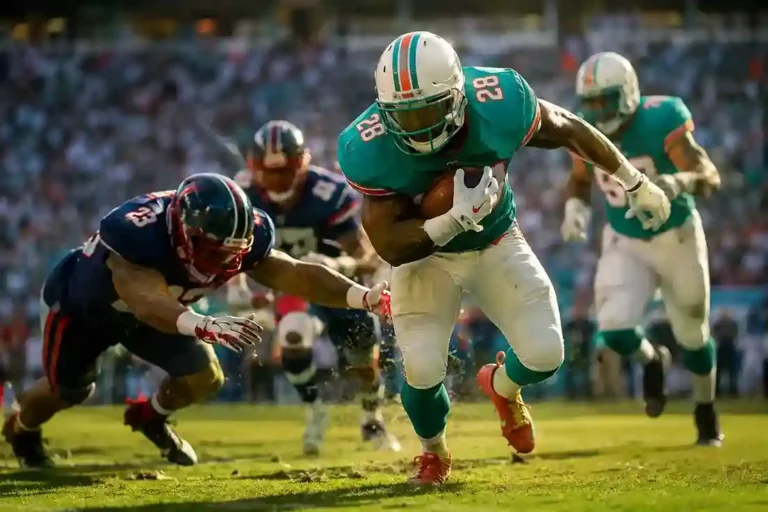
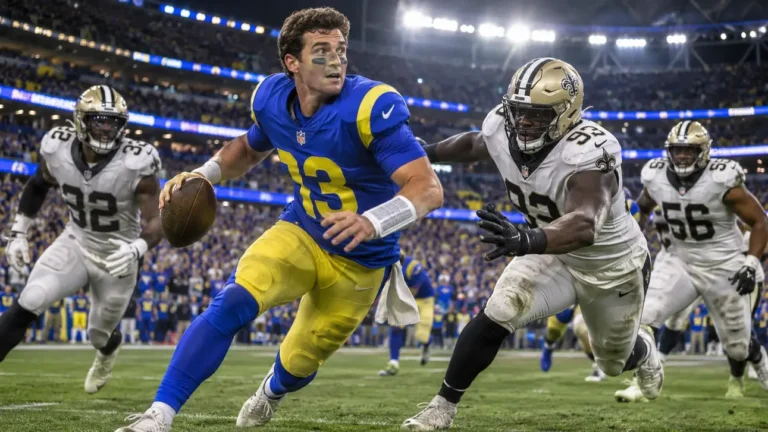
The Washington Commanders defeated the Philadelphia Eagles 27-10 on Sunday night, November 1, 2026, at Northwest Stadium in Landover, Maryland. The primetime NFC East clash aired nationally on NBC and Peacock, with the Commanders erasing an early 10-0 deficit by scoring 27 unanswered points to snap their month-long winless streak.
Washington quarterback Jayden Daniels threw for 217 yards and one touchdown while managing the game efficiently, finishing with a 90.7 passer rating. The Eagles, starting Tanner McKee in place of the injured Jalen Hurts, moved the ball well on their opening drive but collapsed thereafter, managing just 268 total yards and failing to score over the final three quarters. Philadelphia’s sixth consecutive loss drops them to 2-6, while Washington improves to 2-4-1.
Match Overview Table
| Information | Match Details |
| Event | NFL Regular Season, Week 8 |
| Game | Philadelphia Eagles vs Washington Commanders |
| Date | November 1, 2026 |
| Venue | Northwest Stadium, Landover, MD |
| Attendance | 67,617 |
| Winner | Washington Commanders |
| Final Score | 27-10 |
| Broadcast | NBC / Peacock |
Core Match Statistics Overview
| Metric | Eagles (PHI) | Commanders (WAS) |
| Total Yards | 268 | 339 |
| Passing Yards | 177 | 204 |
| Rushing Yards | 91 | 135 |
| First Downs | 17 | 19 |
| Sacks Allowed | 5 | 2 |
| Interceptions Thrown | 1 | 0 |
| Turnovers | 1 | 1 |
| Time of Possession | 28:14 | 31:46 |
| 3rd Down Efficiency | 4/12 (33%) | 5/13 (38%) |
Passing Efficiency Gap
- Tanner McKee averaged just 6.2 yards per attempt, with the Eagles’ longest completion coming on a meaningless final drive.
- Jayden Daniels posted 7.5 yards per attempt and avoided turnovers, while McKee threw a fourth-quarter interception that effectively ended Philadelphia’s comeback hopes.
Sack Differential
- Washington’s defensive front generated five sacks on McKee, consistently collapsing the pocket and forcing errant throws.
- The Eagles managed only two sacks of Daniels, failing to disrupt his rhythm despite entering the game with a theoretical pass-rush advantage.
Red Zone Execution
- The Commanders converted three red-zone trips into 13 points (one touchdown, two field goals), capitalizing on Drew Stevens’ reliable leg.
- Philadelphia’s lone red-zone success came on Saquon Barkley’s 3-yard touchdown run in the first quarter; afterward, the Eagles never penetrated Washington’s 20-yard line again.
Period-by-Period Analysis
First Quarter
| Team | Points |
| Eagles | 10 |
| Commanders | 3 |
Philadelphia opened with a surgical 10-play, 75-yard drive capped by Barkley’s 3-yard score, exploiting Washington’s early penalty troubles.- Jake Elliott added a 35-yard field goal after the Commanders’ Chig Okonkwo lost a fumble on Washington’s second possession.
- Drew Stevens salvaged the quarter for Washington with a 56-yard field goal, his longest of the night, cutting the deficit to 10-3.
Second Quarter
| Team | Points |
| Eagles | 0 |
| Commanders | 10 |
Daniels found Stefon Diggs for an 8-yard touchdown on a back-shoulder throw, capping a 75-yard drive that exposed Philadelphia’s soft coverage.- Stevens added a 29-yard field goal just before halftime after the Eagles’ defense stiffened inside the 10-yard line.
- McKee completed just 5 of 9 passes in the quarter for 38 yards, with Washington’s pass rush beginning to generate consistent pressure.
Third Quarter
| Team | Points |
| Eagles | 0 |
| Commanders | 3 |
Washington’s defense forced three consecutive three-and-outs to open the half, with McKee sacked twice on third down.- Stevens converted a 42-yard field goal midway through the quarter, extending the lead to 16-10.
- Philadelphia’s best drive of the half reached Washington’s 42-yard line but stalled when McKee overthrew Makai Lemon on third-and-7.
Fourth Quarter
| Team | Points |
| Eagles | 0 |
| Commanders | 11 |
Rachaad White’s 1-yard touchdown plunge and a successful two-point conversion pushed the lead to 24-10 with 9:12 remaining.- Jake Elliott appeared to convert a 36-yard field goal to cut the lead to seven, but an illegal formation penalty negated the kick; his 41-yard retry missed wide right.
- Stevens sealed the victory with a 38-yard field goal, his fourth of the game, as Washington drained the final 4:33 off the clock.
Detailed Team Player Statistics
Washington Commanders Player Statistics
Jayden Daniels, QB
| Metric | Value |
| Completions/Attempts | 16/29 (55.2%) |
| Passing Yards | 217 |
| Touchdowns | 1 |
| Interceptions | 0 |
| Passer Rating | 90.7 |
| Rushing Yards | 23 |
Daniels managed the game with poise after a rocky opening quarter, distributing to seven different receivers and avoiding the crippling mistakes that defined Washington’s early-season struggles. His second-quarter touchdown to Diggs demonstrated the arm talent that made him a first-round pick, fitting the ball into a tight window against tight coverage.
Rachaad White, RB
| Metric | Value |
| Carries | 11 |
| Rushing Yards | 55 |
| Yards per Carry | 5.0 |
| Touchdowns | 1 |
White provided the complementary ground threat Washington lacked in recent weeks, averaging five yards per carry and converting critical short-yardage situations. His fourth-quarter touchdown effectively put the game out of reach.
Treylon Burks, WR
| Metric | Value |
| Receptions | 3 |
| Receiving Yards | 81 |
| Yards per Reception | 27.0 |
Burks served as Daniels’ primary downfield threat, with his 27-yard average per catch exposing Philadelphia’s injury-depleted secondary. His ability to stretch the field vertically opened underneath routes for Diggs and Antonio Williams.
Stefon Diggs, WR
| Metric | Value |
| Receptions | 3 |
| Receiving Yards | 38 |
| Touchdowns | 1 |
Diggs delivered the game’s defining offensive play, hauling in an 8-yard touchdown that tied the score at 10 and shifted momentum permanently toward Washington. The veteran’s route-running precision created separation against Philadelphia’s young corners.
Philadelphia Eagles Player Statistics
Tanner McKee, QB
| Metric | Value |
| Completions/Attempts | 23/34 (67.6%) |
| Passing Yards | 212 |
| Touchdowns | 0 |
| Interceptions | 1 |
| Sacks | 5 |
| Passer Rating | 72.2 |
McKee’s completion percentage looks respectable in isolation, but the context reveals a quarterback limited to short-area throws with no downfield aggression. His interception and five sacks underscored the gap between statistical competence and functional production.
Saquon Barkley, RB
| Metric | Value |
| Carries | 13 |
| Rushing Yards | 30 |
| Yards per Carry | 2.3 |
| Touchdowns | 1 |
| Receptions | 1 |
| Receiving Yards | 24 |
Barkley’s first-quarter touchdown was his only highlight; Washington’s defensive front controlled the line of scrimmage thereafter, holding him to 2.3 yards per carry. The All-Pro running back was visibly limited by hamstring and back injuries, frequently rotating to the sideline for treatment.
Makai Lemon, WR
| Metric | Value |
| Receptions | 6 |
| Targets | 9 |
| Receiving Yards | 57 |
| Yards per Reception | 9.5 |
Lemon led Philadelphia in receiving for the second consecutive week, but his production came almost entirely on short crossing routes and screens. The rookie’s 9.5-yard average per catch reflects an offense incapable of threatening defenses vertically.
Eli Stowers, TE
| Metric | Value |
| Receptions | 3 |
| Receiving Yards | 53 |
| Yards per Reception | 17.7 |
Stowers provided the Eagles’ only explosive receiving play, a 31-yard seam route in the second quarter. However, he was targeted just four times as McKee consistently checked down to safer options.
Statistical Leaders Summary Table
| Category | Philadelphia Eagles | Washington Commanders |
| Leading Passer | Tanner McKee (212 YDS, 0 TD, 1 INT) | Jayden Daniels (217 YDS, 1 TD, 0 INT) |
| Leading Rusher | Saquon Barkley (30 YDS, 1 TD) | Rachaad White (55 YDS, 1 TD) |
| Leading Receiver | Makai Lemon (57 YDS) | Treylon Burks (81 YDS) |
| Top Defender (Sacks) | Jalen Carter (1.0) | Clelin Ferrell (1.5) |
| Turnover Leader | None | Trey Amos (1 INT) |
Analytical Breakdowns
Why Washington Won
Defensive Dominance After the First Quarter
Washington’s defense pitched a shutout over the final three quarters, holding Philadelphia to 199 yards before a meaningless final drive. The Commanders generated pressure on 42% of McKee’s dropbacks, a figure that dwarfed their season average of 28%.
| Metric | First Quarter | Final Three Quarters |
| Points Allowed | 10 | 0 |
| Total Yards Allowed | 75 | 193 |
| Sacks | 0 | 5 |
| Third Down Stops | 0/1 | 4/8 |
Daniels’ Efficiency Under Pressure
Daniels faced pressure on 35% of his dropbacks but completed 9 of 12 passes for 112 yards when the pocket collapsed, including the touchdown to Diggs. His ability to extend plays with his legs bought time for receivers to uncover against Philadelphia’s man coverage.
Field Position and Special Teams
Drew Stevens’ four field goals, including a 56-yarder, consistently converted stalled drives into points. Washington’s average starting field position was their own 34-yard line, seven yards better than Philadelphia’s average, a hidden advantage in a game decided by field position and execution.
Why Philadelphia Lost
Offensive Line Collapse
The Eagles’ offensive line surrendered five sacks and allowed pressure on nearly half of McKee’s dropbacks. Left tackle Jordan Mailata, typically among the league’s most reliable pass protectors, was beaten twice for sacks by Washington’s edge rushers.
| Pressure Metric | Eagles | Commanders |
| Sacks Allowed | 5 | 2 |
| QB Hits Allowed | 9 | 4 |
| Pressure Rate | 42% | 28% |
Inability to Generate Explosive Plays
Philadelphia’s longest play from scrimmage before the final drive was 22 yards. The Eagles averaged just 4.6 yards per play, well below their season average of 5.1, and failed to record a single completion of 25+ yards until the game was decided.
Penalty Discipline
Jake Elliott’s negated field goal was the most visible penalty, but the Eagles committed eight penalties for 65 yards, including three pre-snap infractions on third down that extended Washington drives. The Commanders, despite their own first-quarter sloppiness, committed just four penalties for 25 yards after the opening period.
Historical Context & Advanced Insights
Season Series Breakdown
| Date | Result | Location |
| September 13, 2026 | Eagles 24, Commanders 22 | Philadelphia |
| November 1, 2026 | Commanders 27, Eagles 10 | Landover |
The season split reflects the divergent trajectories of these franchises. Philadelphia’s Week 1 victory featured Jalen Hurts at quarterback and a healthy Saquon Barkley; the rematch saw Tanner McKee under center and a depleted supporting cast. Washington’s offense in Week 1 managed just 22 points against a full-strength Eagles defense; on Sunday, they scored 27 against a unit missing multiple starters.
Advanced Statistical Insights
The most revealing metric from this matchup is yards per play differential. Washington averaged 5.6 yards per play to Philadelphia’s 4.6, a full yard gap that, when extrapolated across 60 offensive snaps, explains the 17-point margin. The Commanders’ advantage stemmed not from volume but from efficiency: they needed just 61 plays to accumulate 339 yards, while the Eagles required 59 plays for 268.
Daniels’ completion percentage over expected (CPOE) of +6.2% contrasted sharply with McKee’s -4.1%, per Next Gen Stats. Daniels consistently threw receivers open, while McKee relied on schemed separation and check-downs. This quarterback efficiency gap, more than any other factor, determined the outcome.
Game Implications & Key Lessons
What This Means for Washington
- The Commanders remain alive in a weak NFC East, two games behind the Giants with nine games remaining. Daniels’ first win as a starter since October 2025 provides a psychological reset for a franchise that had lost five of six.
- Rachaad White’s emergence as a reliable complementary back gives Washington a balanced offensive identity it lacked during its early-season skid.
- The defense’s second-half shutout demonstrates that Dan Quinn’s schematic adjustments are taking hold; Washington allowed just 10 second-half points per game over its last three contests.
What This Means for Philadelphia
- At 2-6, the Eagles’ season is functionally over. The offense has scored 17 points or fewer in five of eight games, and the return of Jalen Hurts cannot alone fix an offensive line allowing pressure at a league-worst rate.
- Saquon Barkley’s injuries have stripped the offense of its foundational element. His 2.3 yards per carry on Sunday marked his lowest output since 2021.
- Nick Sirianni’s job security becomes the dominant storyline in Philadelphia. A sixth consecutive loss, combined with visible sideline dysfunction, suggests organizational changes are inevitable.
Key Lessons
- Quarterback efficiency trumps volume: Daniels’ 217 yards on 29 attempts outperformed McKee’s 212 on 34 attempts because of turnover avoidance and downfield aggression.
- Pressure rate predicts outcomes more reliably than sack totals alone; Washington’s 42% pressure rate disrupted Philadelphia’s timing all night.
- Penalty discipline in critical moments separates winning and losing teams; Elliott’s negated field goal was a four-point swing in a game decided by 17.
- Running back health is a leading indicator of offensive viability; Barkley’s limitations forced Philadelphia into predictable passing situations.
- Defensive halftime adjustments matter: Washington’s second-half shutout came after allowing 10 first-quarter points, reflecting Quinn’s schematic flexibility.
- Field position compounds: Washington’s seven-yard average starting field position advantage translated to roughly 1.5 additional scoring opportunities.
FAQs
Who won the Eagles vs Commanders game?
The Washington Commanders defeated the Philadelphia Eagles 27-10 on November 1, 2026, at Northwest Stadium.
Who scored the most points in the Eagles vs Commanders matchup?
Drew Stevens led all scorers with 12 points on four field goals for Washington. Saquon Barkley and Stefon Diggs each scored touchdowns for their respective teams.
What were Jayden Daniels’ stats against the Eagles?
Daniels completed 16 of 29 passes for 217 yards, one touchdown, and zero interceptions, finishing with a 90.7 passer rating. He also rushed for 23 yards.
What were Tanner McKee’s stats in the loss?
McKee completed 23 of 34 passes for 212 yards, zero touchdowns, and one interception. He was sacked five times and finished with a 72.2 passer rating.
How many sacks did the Commanders defense record?
Washington recorded five sacks of Tanner McKee, led by Clelin Ferrell’s 1.5 sacks. The Commanders also intercepted one pass.
Did Saquon Barkley score a touchdown?
Yes, Barkley scored on a 3-yard run in the first quarter. He finished with just 30 rushing yards on 13 carries.
Conclusion
The Philadelphia Eagles vs Washington Commanders match player stats reveal a game decided by execution under pressure. Jayden Daniels’ turnover-free efficiency and Washington’s five-sack defensive performance overwhelmed a Philadelphia offense that lacks both health and schematic answers. The Commanders’ 27 unanswered points underscore a fundamental truth: in the NFL, efficiency and discipline outperform individual talent when that talent is compromised. For Washington, the win offers a template for competitive football in a flawed division. For Philadelphia, the statistics paint a bleaker picture—one that suggests systemic failure requiring more than a quarterback change to fix.